
Scaling Design System Adoption at Vattenfall
Improving the scalability, documentation, and adoption of Vattenfall’s enterprise design system through UX research, component design, documentation strategy, usability testing, and cross-functional collaboration.
Graduation Internship
Project Scope
Enterprise Design System Optimization
Role
Product Designer · UX Research
Project Duration
Feb 2026 – June 2026
Website
The Challenge
Vattenfall's design system was partially implemented across multiple tools, with fragmented documentation, inconsistent usage, and low adoption across teams. At the start of the project, documentation coverage sat at 8% and design system adoption was around 20% across product teams.
Designers and developers often relied on informal communication instead of a centralized source of truth, creating friction in daily workflows and inconsistencies across products.
The goal was to improve scalability, clarity, and usability of the design system while supporting better collaboration between teams.
Discovery
Understanding the Current System
System audit · Documentation review · Gap analysis
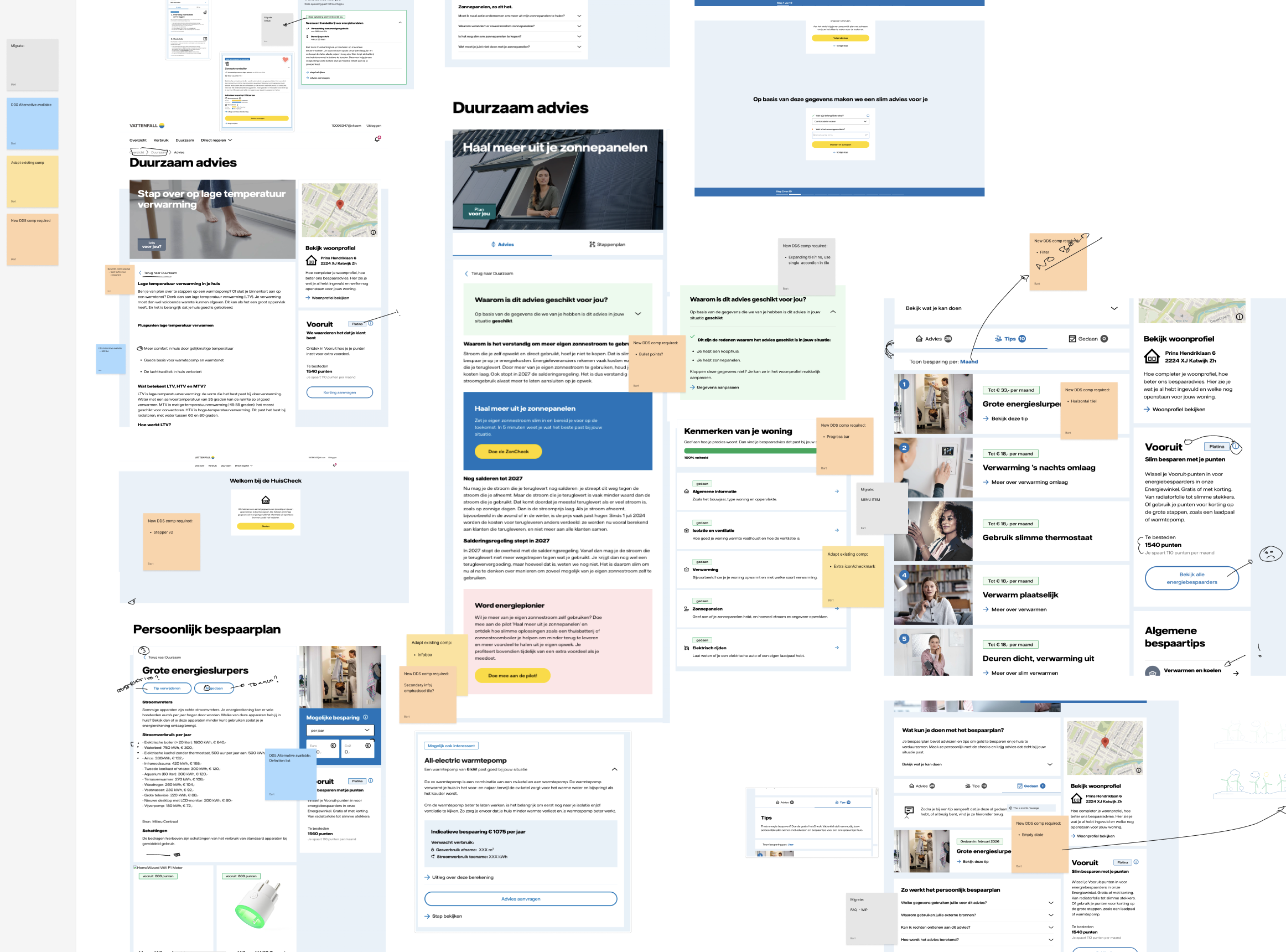
I explored the existing design system ecosystem across Figma, Storybook, and Frontify to understand how teams currently access components and documentation.
The research revealed fragmented information, inconsistent workflows, and a strong dependency on informal knowledge sharing through Teams and internal discussions.
Competitive Analysis
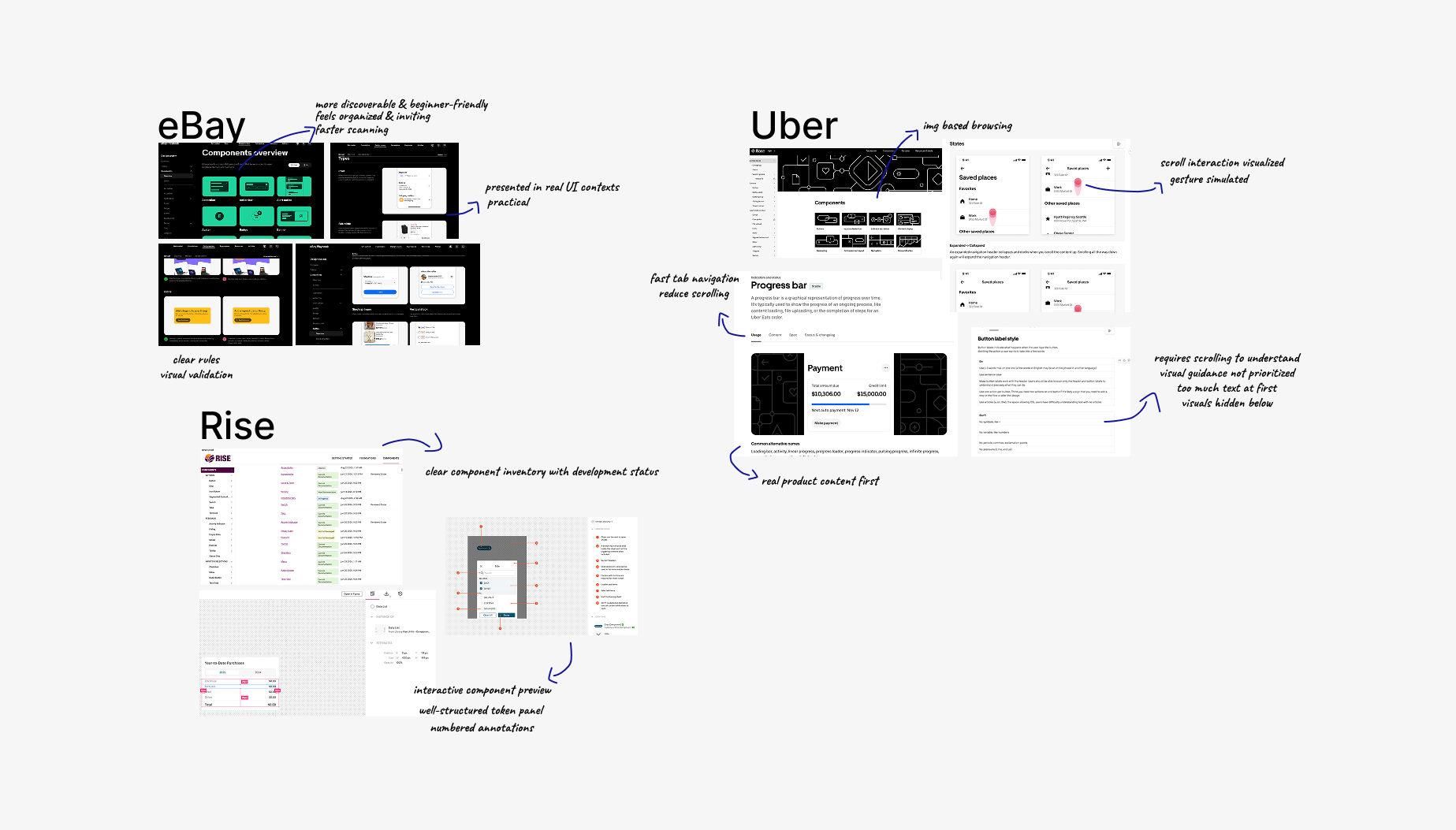
I benchmarked several mature design systems to understand how enterprise platforms structure documentation, navigation, and component guidance.
The analysis highlighted the importance of visual-first documentation, real product examples, clear navigation and separating design and development guidance
eBay · Uber · Rise UI Kit
Assumption Mapping
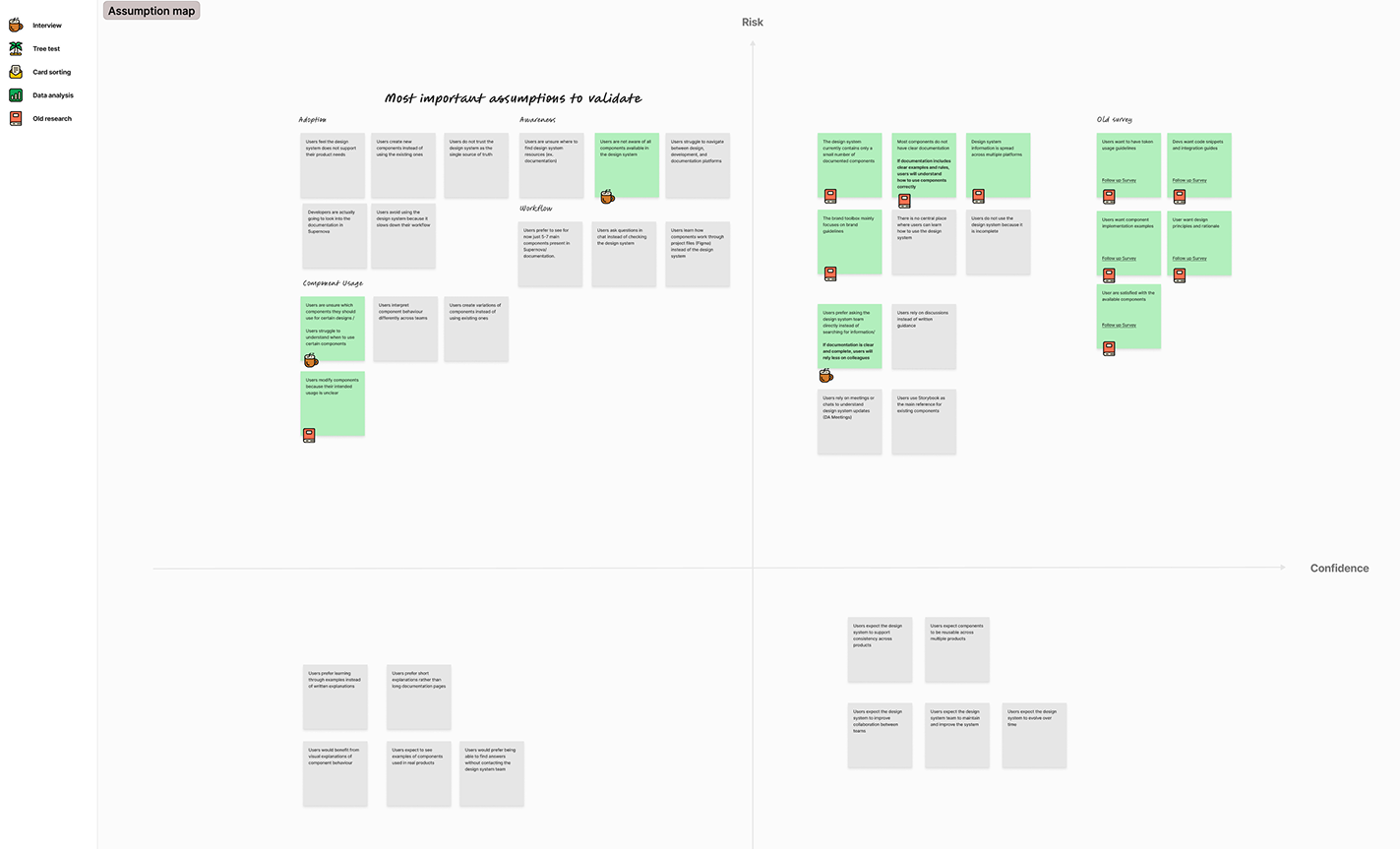
Before conducting interviews, I organized initial findings and uncertainties through assumption mapping.
This helped identify which assumptions were already validated through research and which areas required deeper investigation with designers and developers.
The assumption maps also helped frame interview questions and prioritize the most important opportunities within the design system ecosystem.
Research preparation
User Research
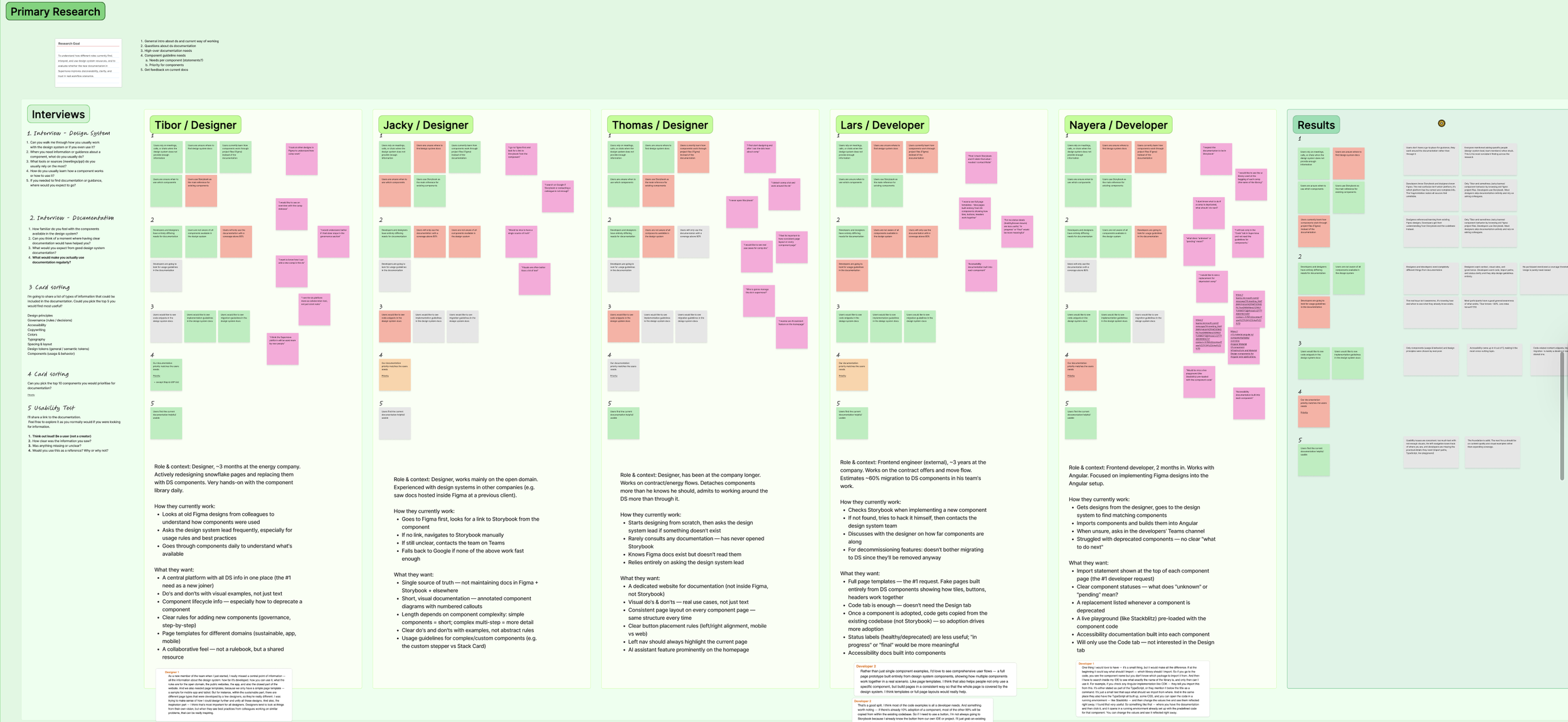
To better understand workflow challenges, I conducted interviews with designers and developers from different product teams.
The sessions included workflow walkthroughs, card sorting exercises, component prioritization, and live usability testing of the documentation platform.
One of the strongest findings was that designers and developers consume documentation very differently. Designers preferred visual guidance and real UI examples, while developers focused more on implementation clarity and technical references.
Another recurring insight was that most teams relied more on asking colleagues than using existing documentation because information was incomplete or difficult to navigate.
Interviews · Card Sorting · Usability Testing
Define
Research Synthesis
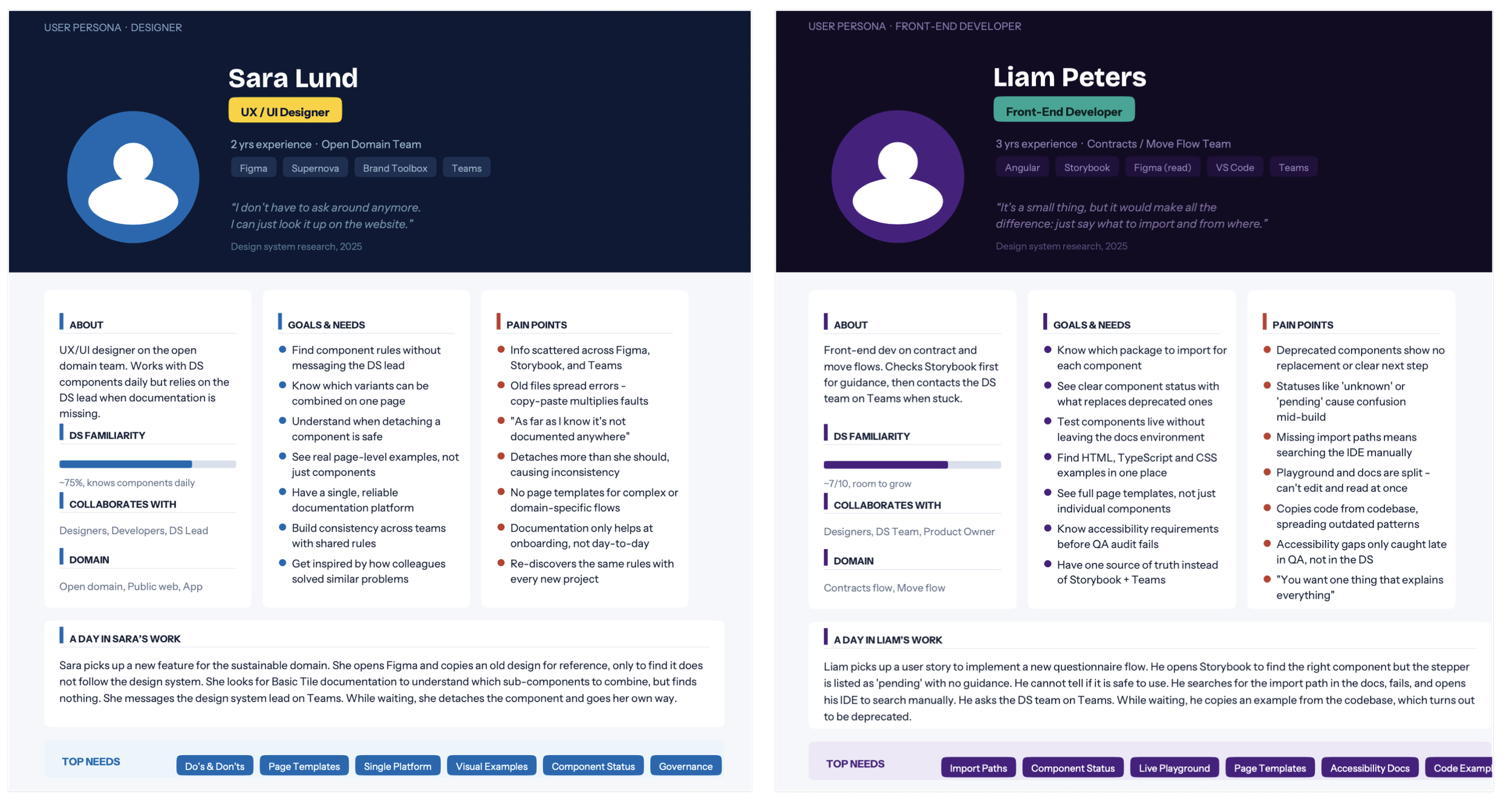
Personas · Core problem definition
After synthesizing the interview findings, I identified several recurring issues affecting both usability and adoption of the design system.
The research revealed challenges around fragmented documentation, inconsistent component usage, unclear governance, and dependency on informal knowledge sharing across teams.
To better represent the different workflows and expectations of designers and developers, I created research-based personas grounded directly in interview insights.
Prioritization & Decision Making
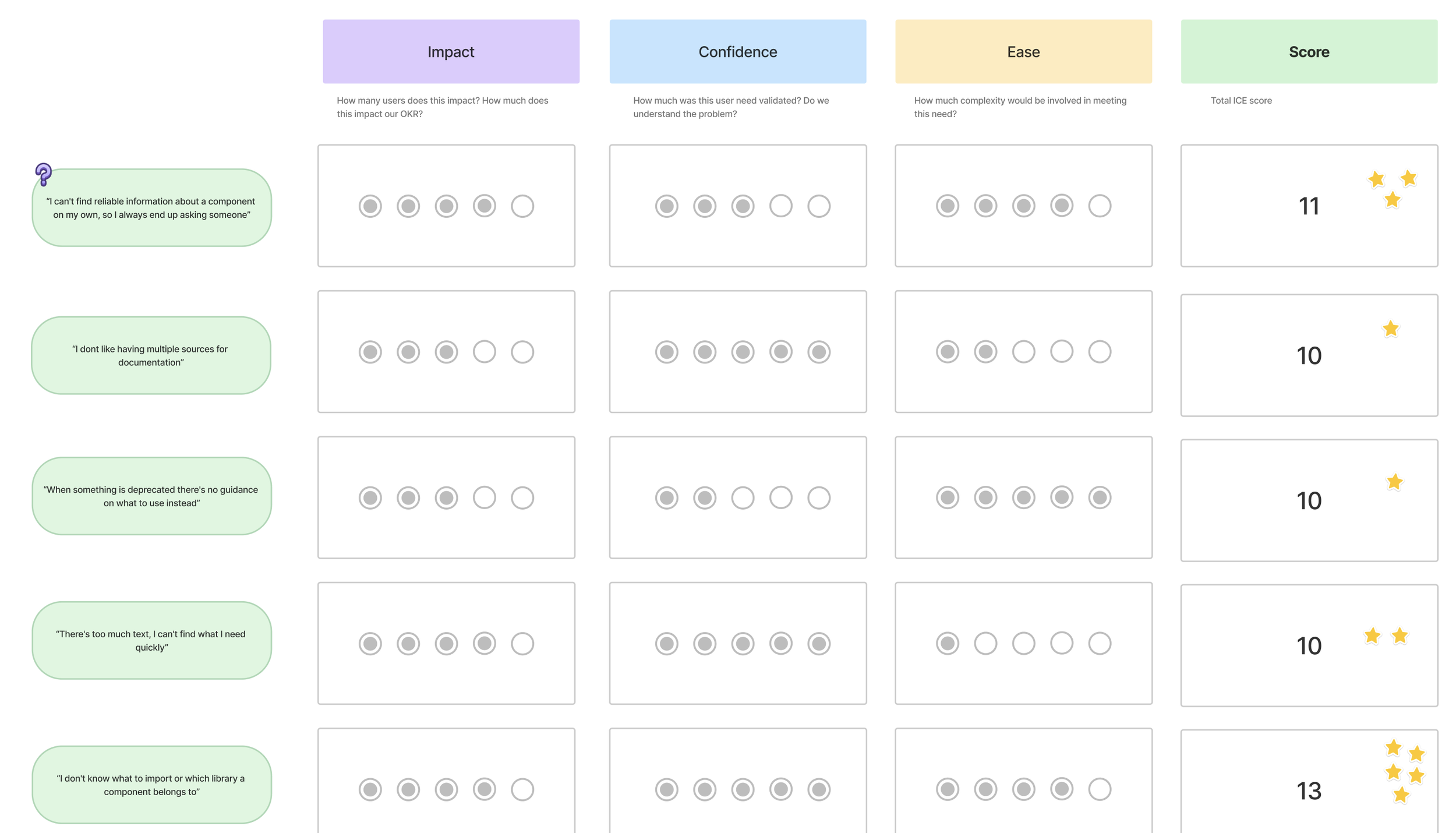
ICE scoring · Opportunity prioritization
To prioritize the most impactful improvements, I collaborated with my team in an ICE scoring session, evaluating opportunities based on impact, confidence, and ease of implementation.
This helped focus the project on high-value improvements while keeping decisions grounded in validated research insights.
Design Opportunity
How might we make the design system faster and easier to use, so designers and developers can ship consistent products without asking for help?
Ideate
Defining Solution Directions
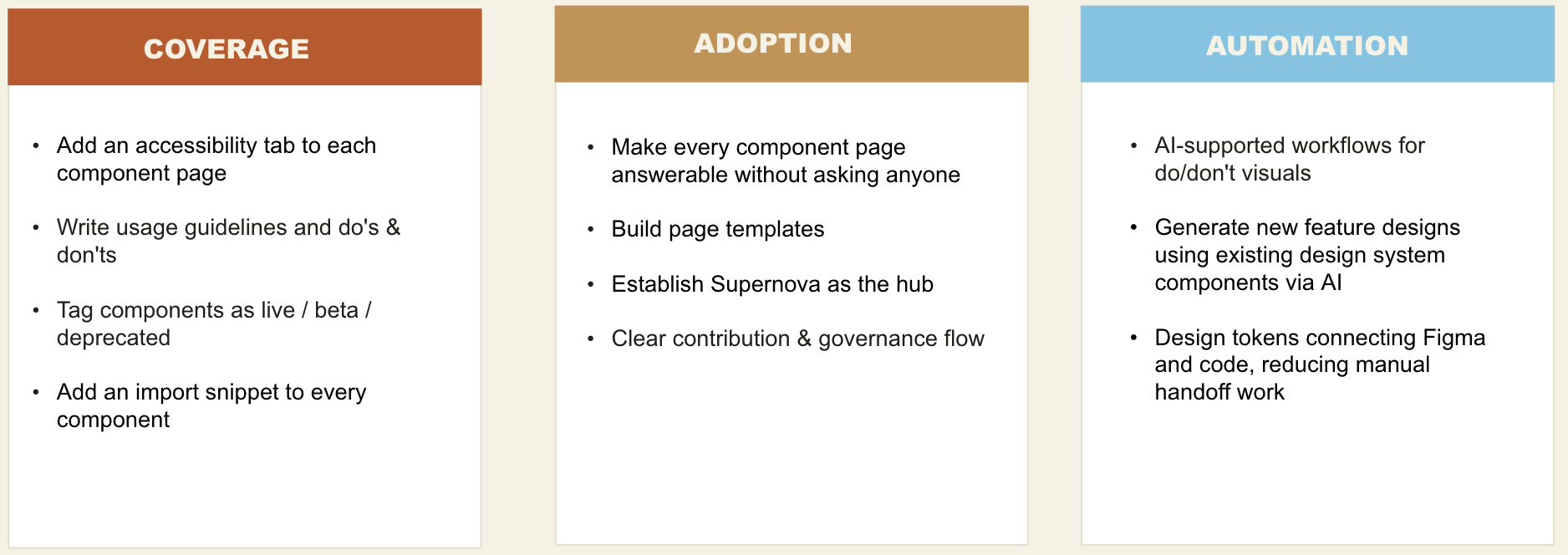
How Might We
Based on the research findings and prioritized opportunities, I translated key user and business challenges into actionable solution directions through a central “How Might We” question.
This helped align research insights with practical improvements focused on scalability, usability, and long-term design system growth.
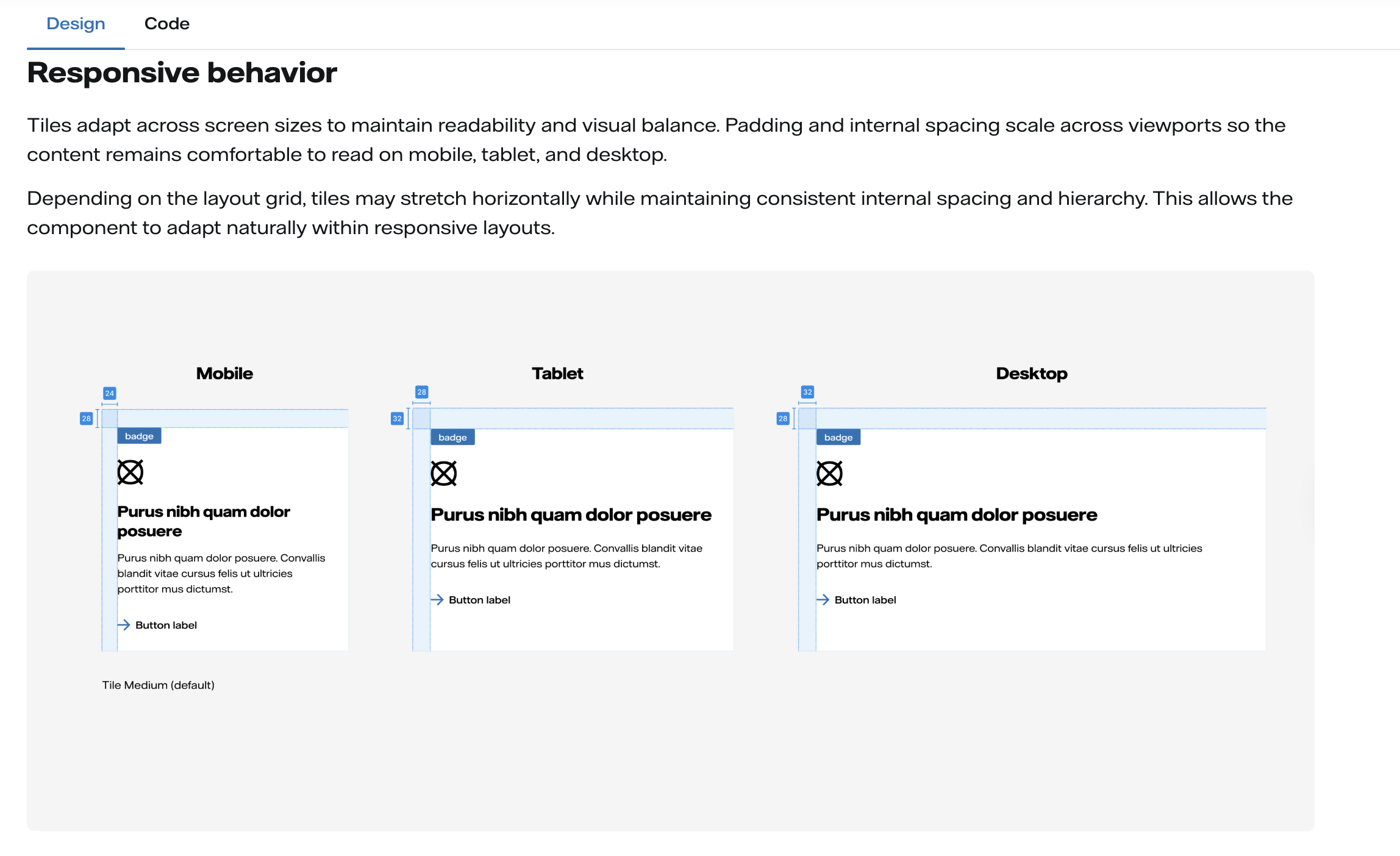
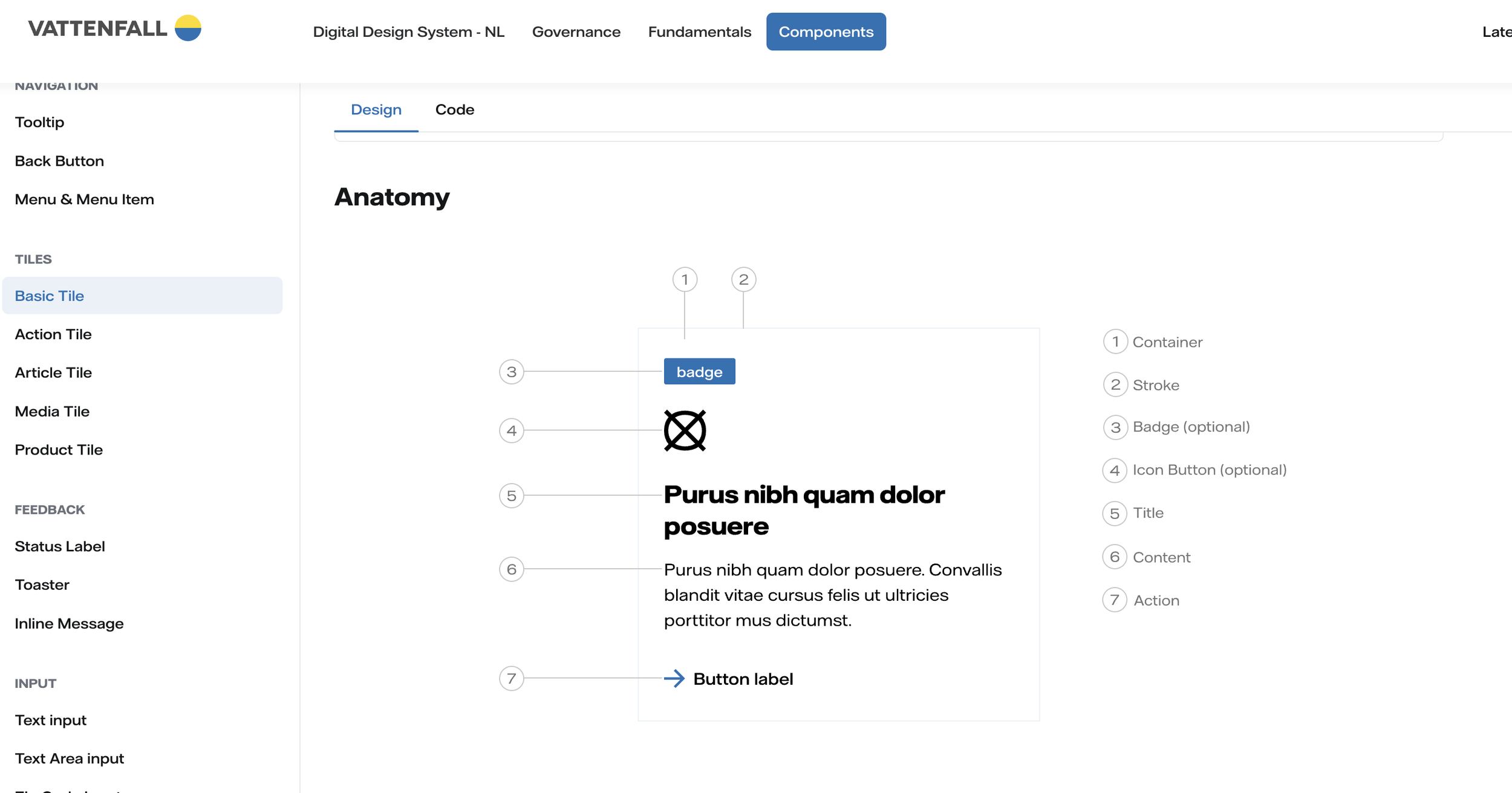
Documentation Strategy
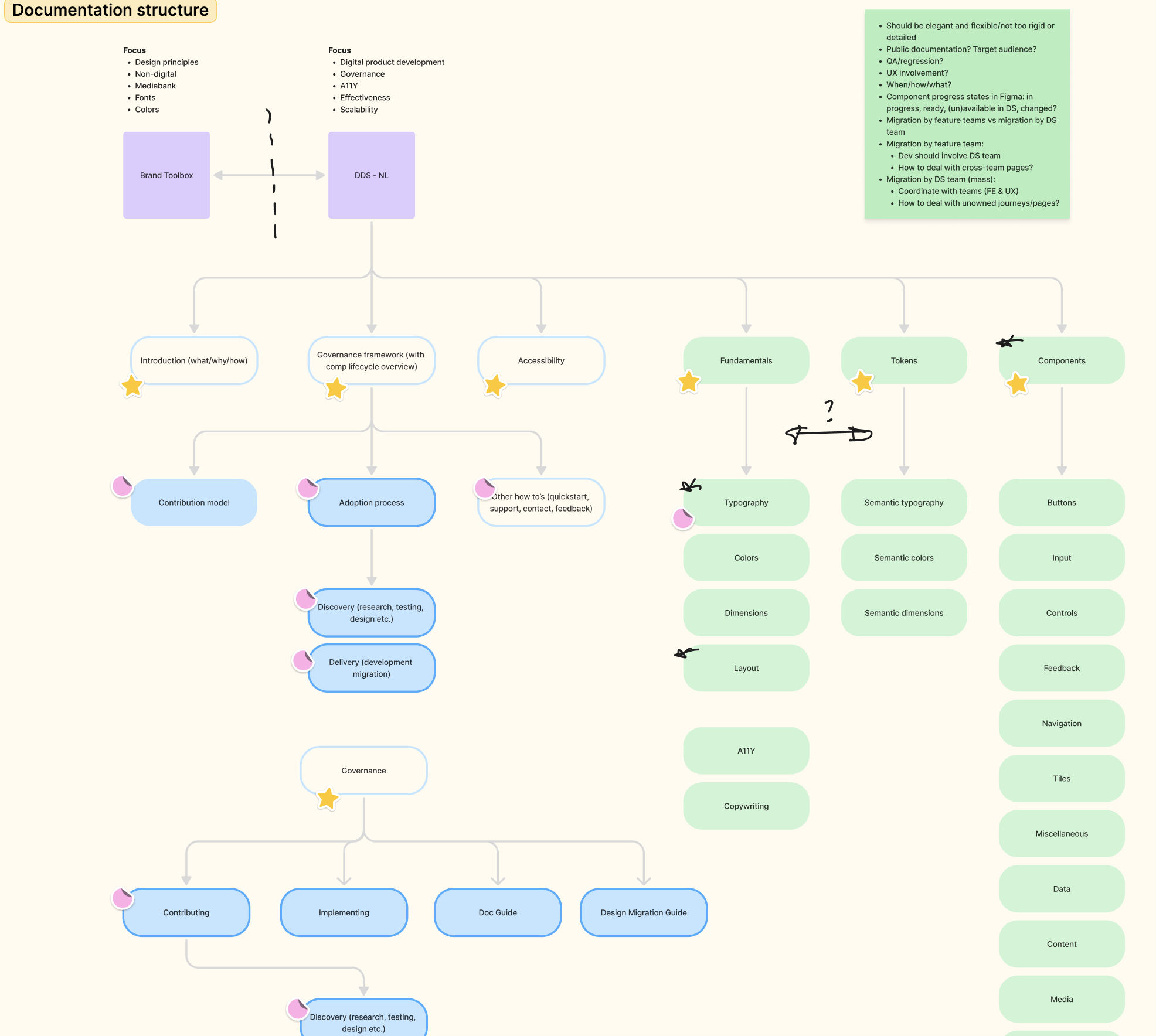
Visual-first structure · Information architecture
Based on the research insights, I developed a documentation strategy focused on reducing friction and improving clarity for both designers and developers.
One of the main decisions was separating documentation into dedicated Design and Code perspectives, reflecting the different workflows and mental models identified during research.
The documentation structure prioritized:
real UI examples
concise guidance
scalable page layouts
reduced cognitive load
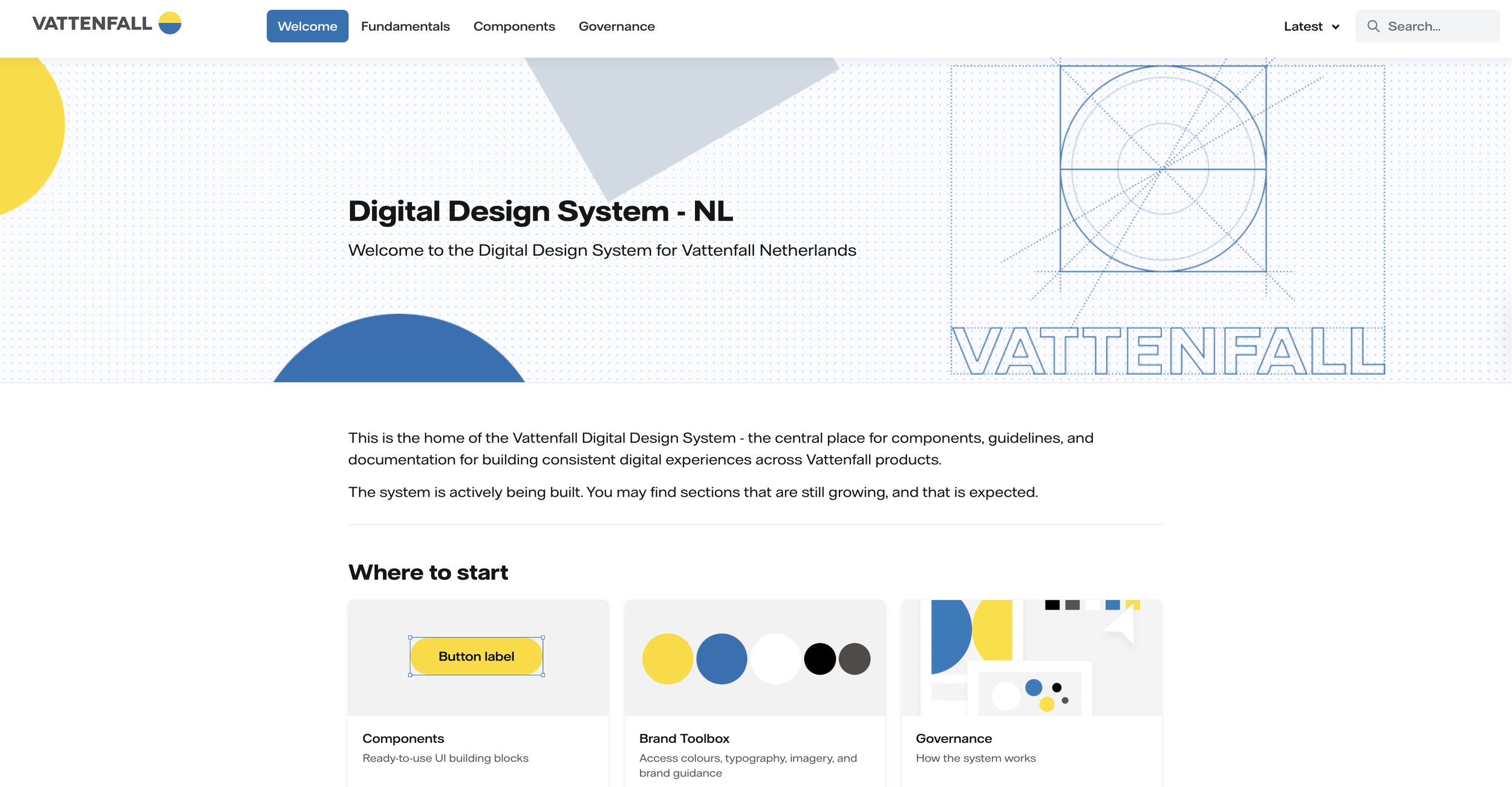
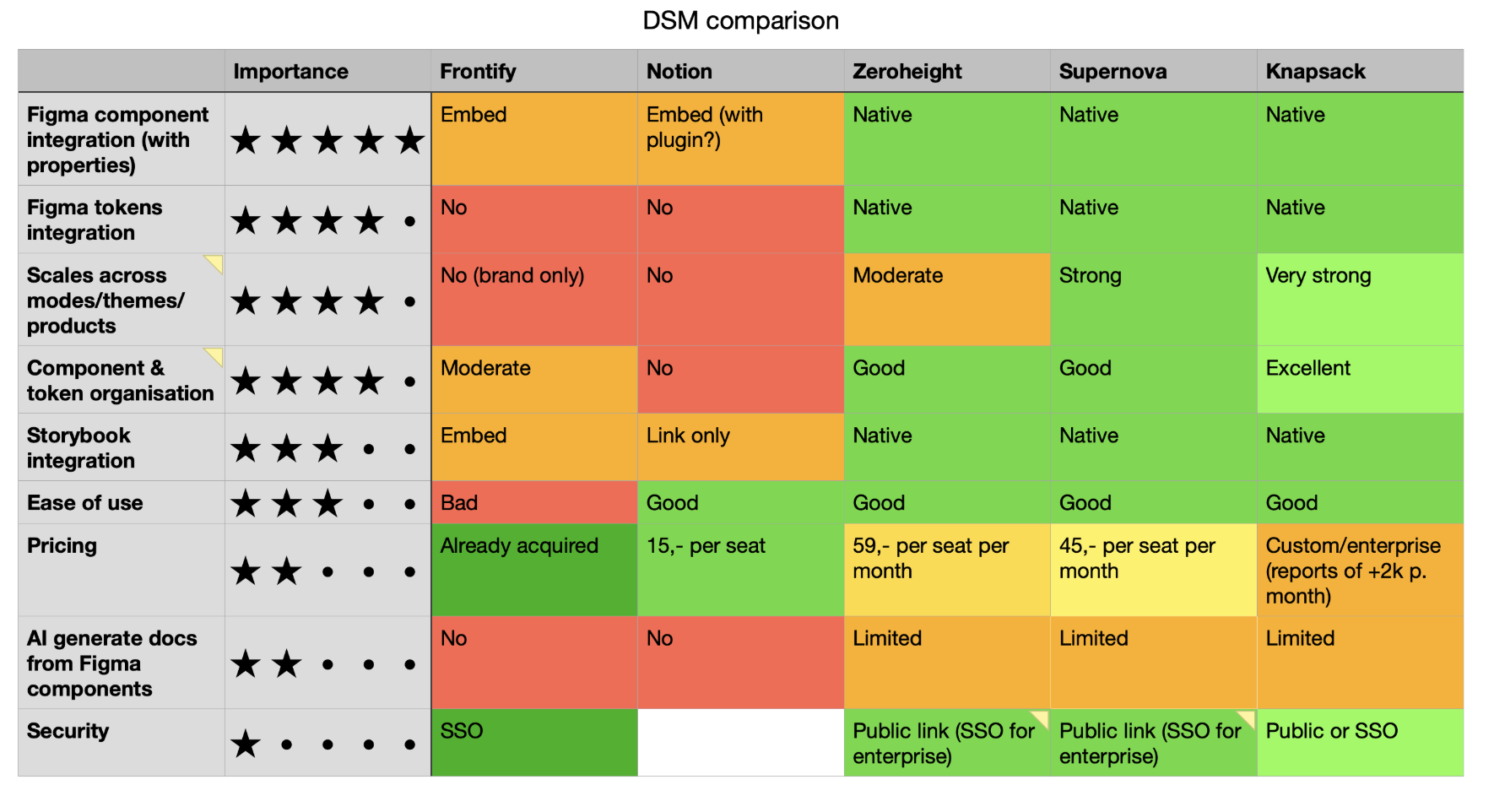
New Platform Decision
Supernova
As part of the project, I explored different documentation platforms together with the design system team to evaluate scalability, maintainability, and long-term usability.
After comparing multiple solutions, Supernova was selected as the most suitable platform due to its flexible structure, integration possibilities, and support for future system growth.
Prototype & Testing
Expanding the Design System
Component creation · Documentation · System improvements
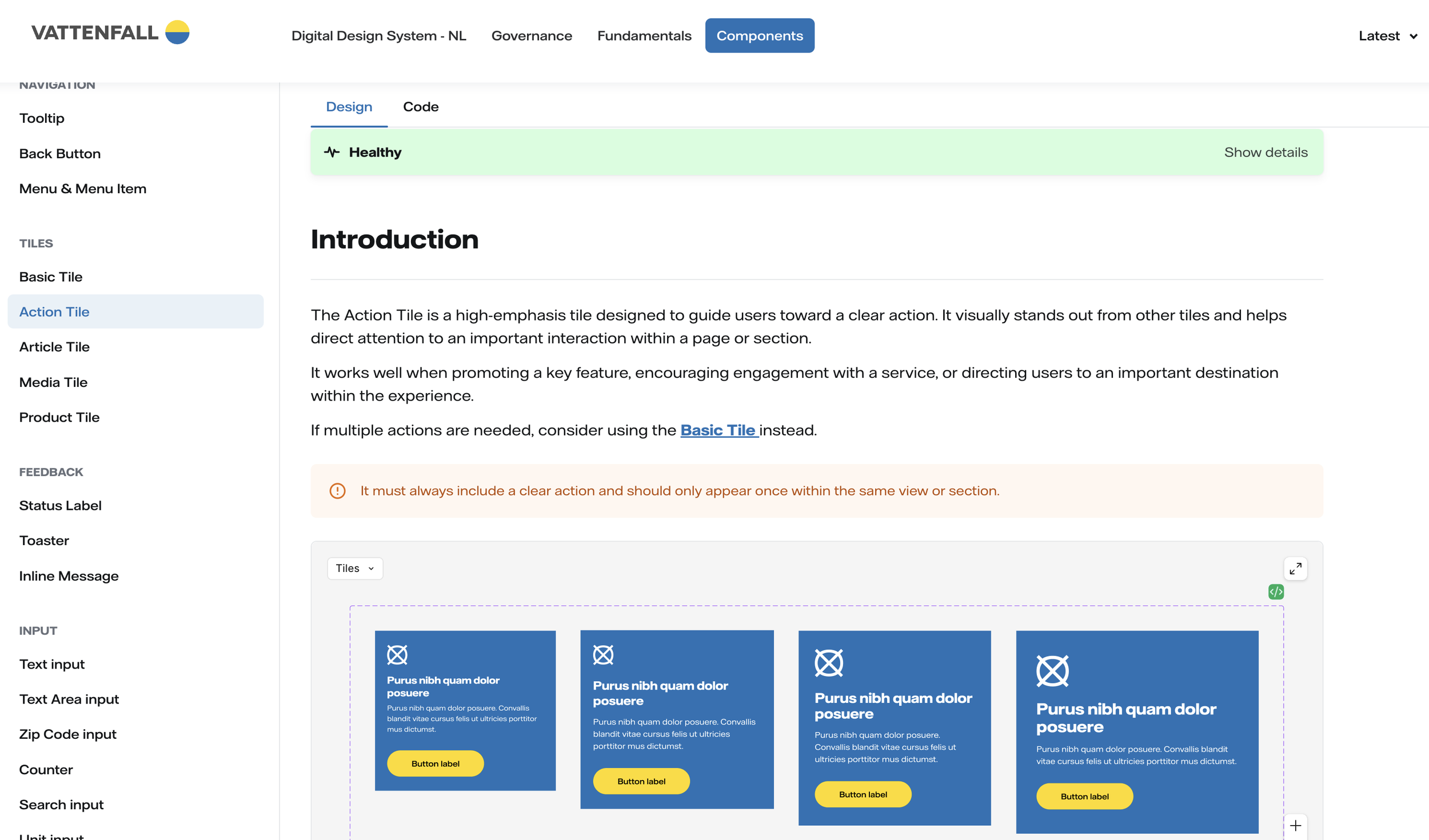
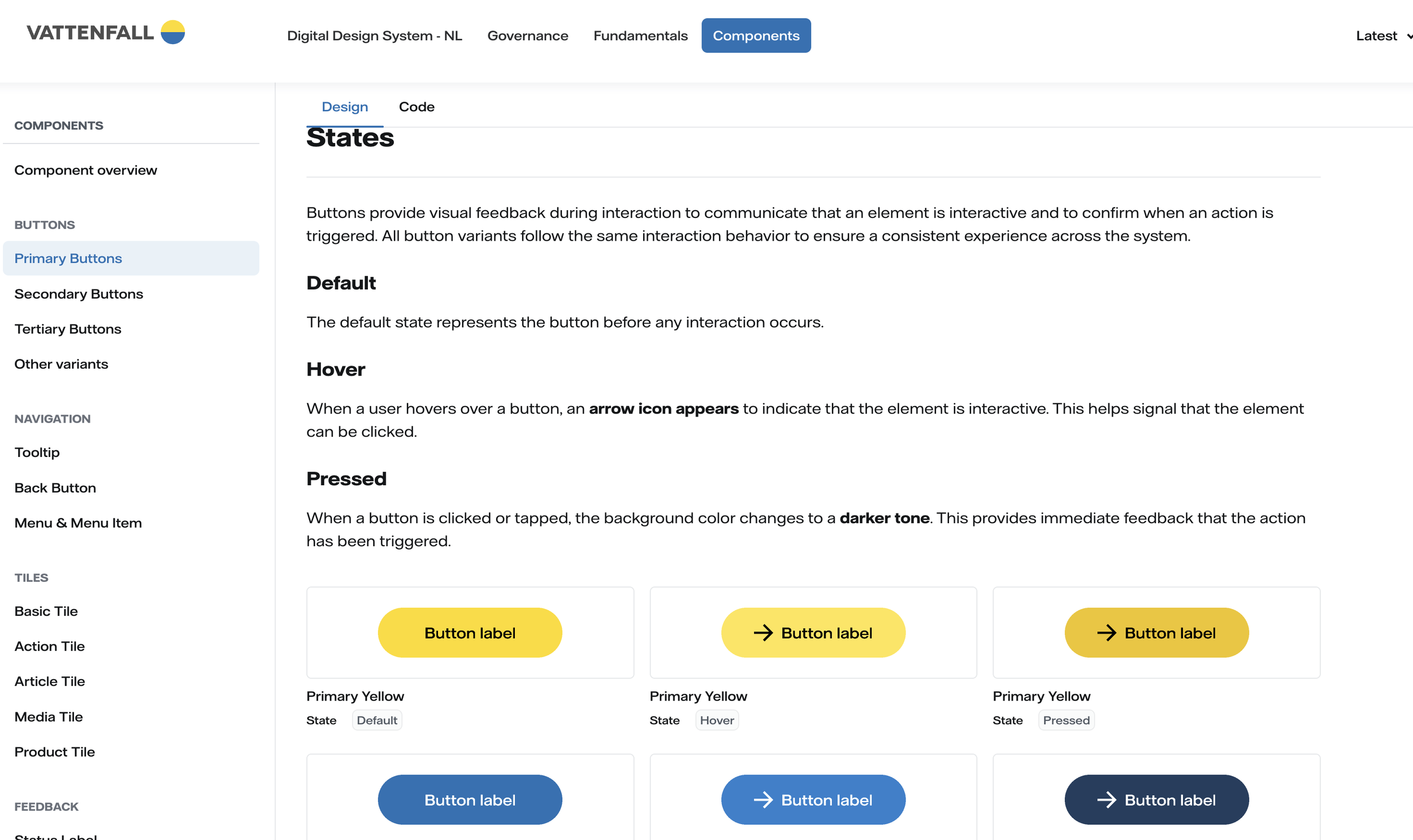
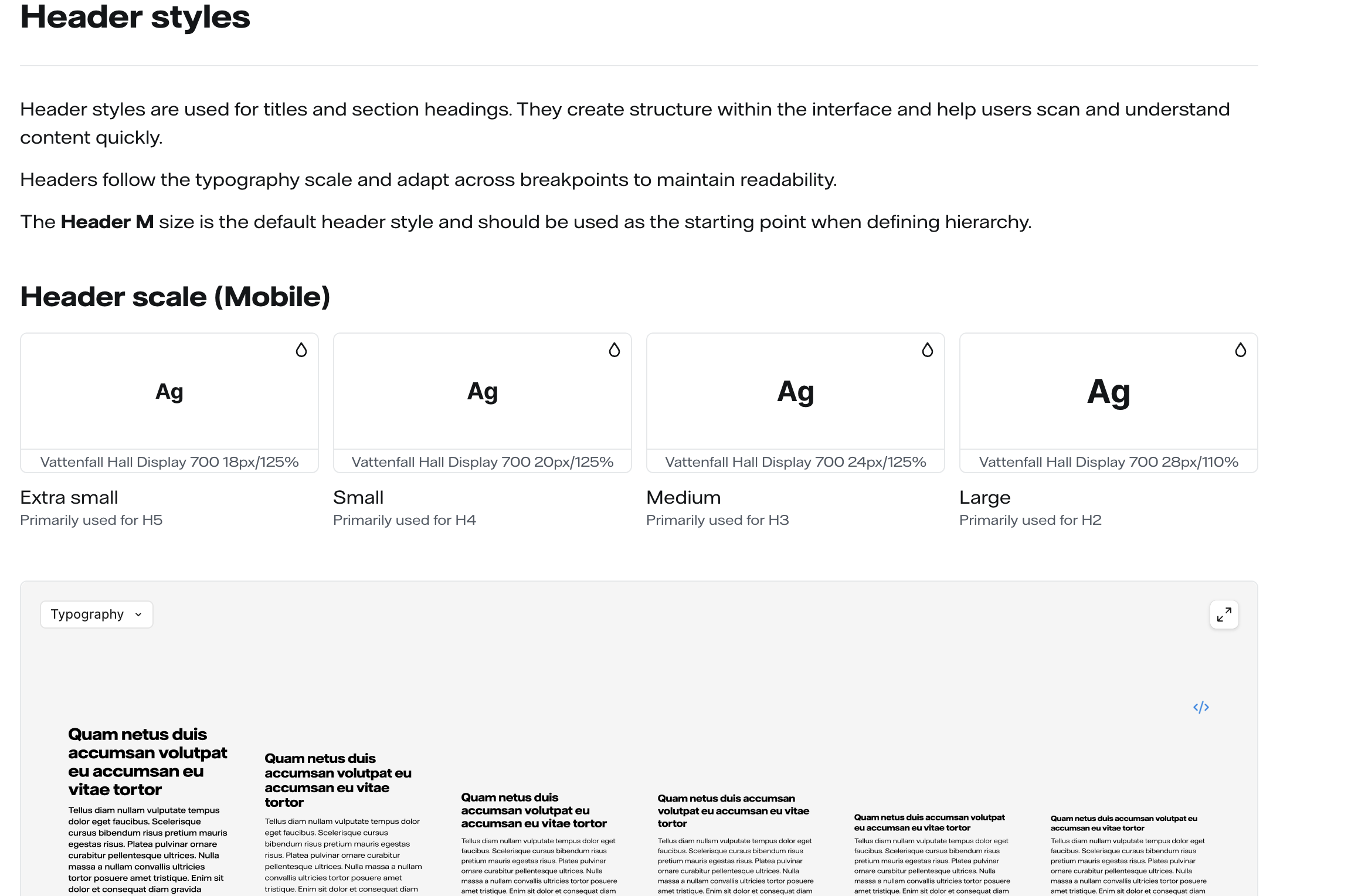
Based on research insights and team feedback, I contributed to expanding and improving the design system ecosystem across both Figma and Supernova.
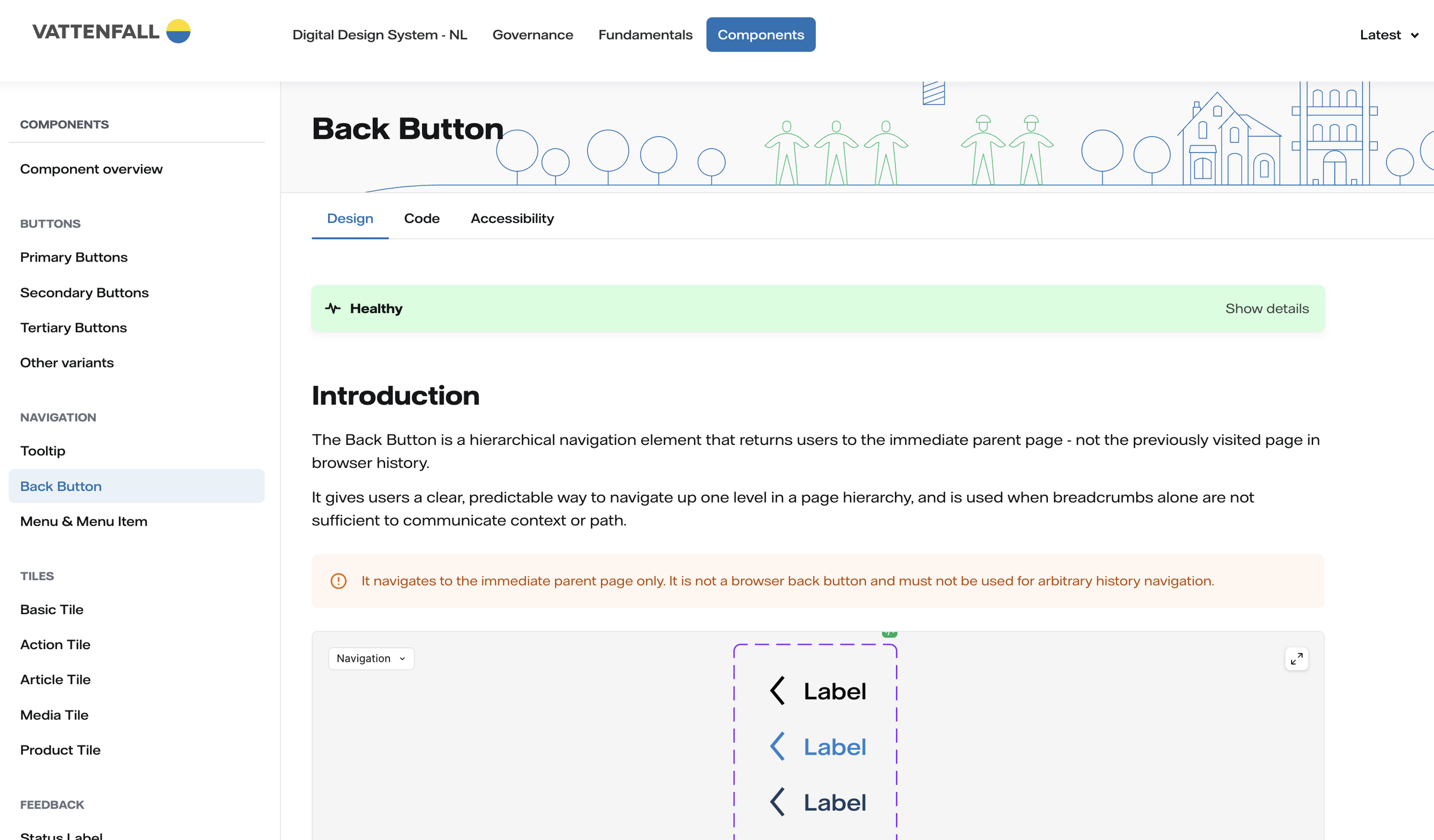
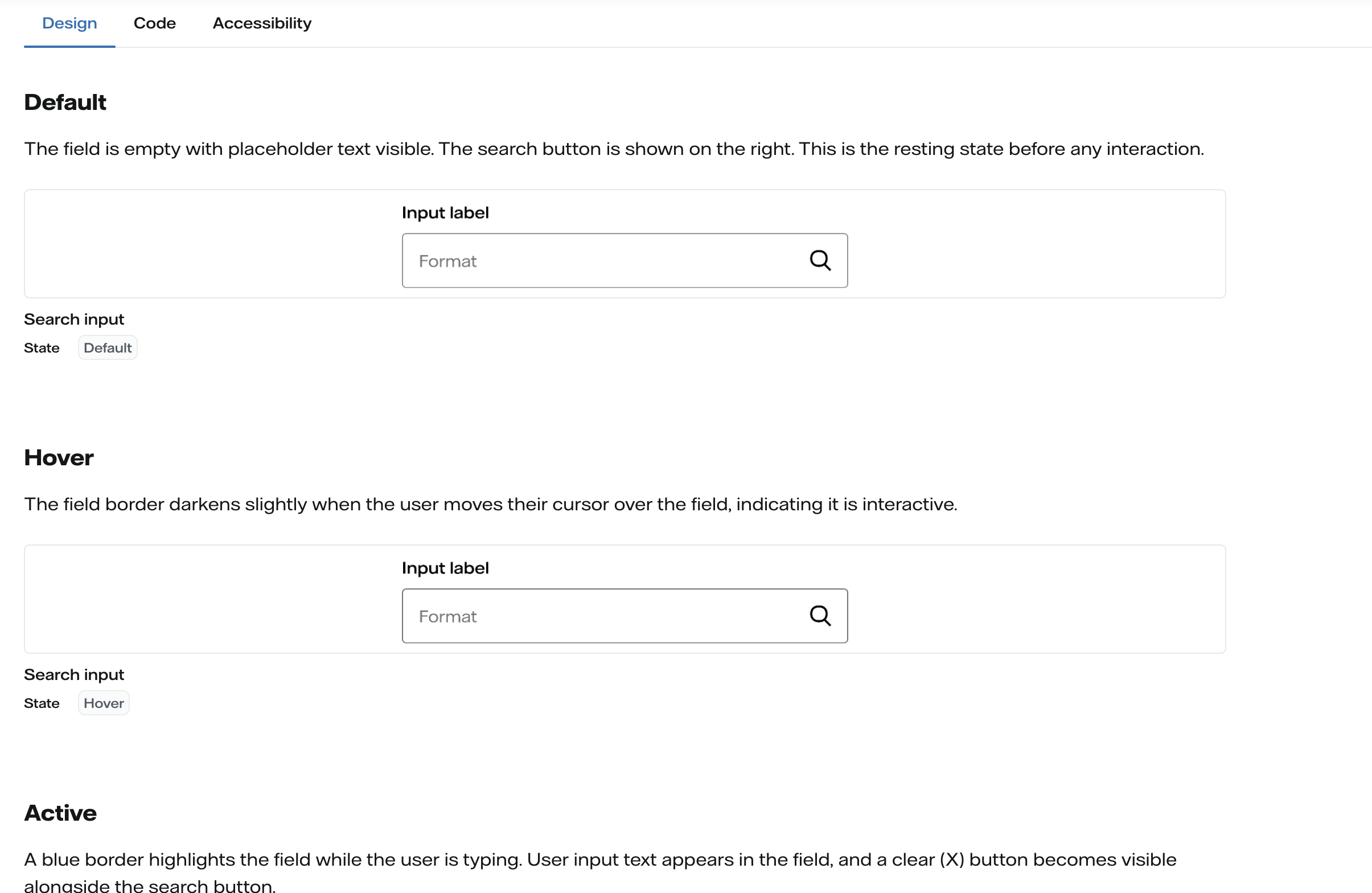
Alongside documenting existing components, I also designed new components and interaction patterns requested by product teams when gaps in the system were identified during real workflows.
For example, recurring navigation issues revealed the need for a dedicated back button component, while another feature request highlighted missing international phone input patterns within the library.
These improvements helped strengthen design system coverage while making the system more practical and reusable for teams working on real product features.
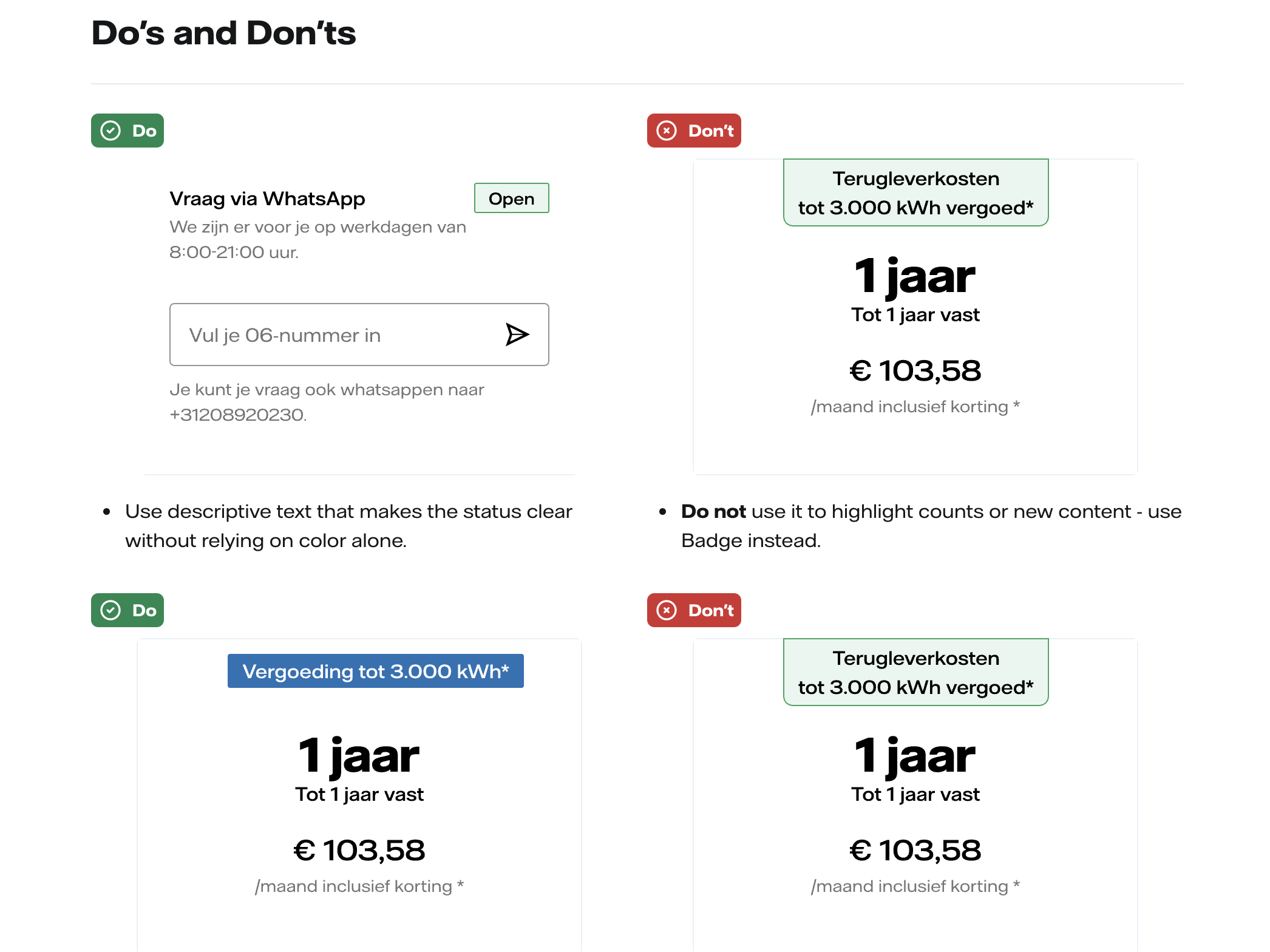
At the same time, I structured component documentation inside Supernova, focusing on scalable page layouts, accessibility guidance, usage rules, and clearer design-to-development communication.
To improve efficiency and reduce repetitive manual work, I also explored AI-supported workflows using Claude Cowork and custom prompts and skills during the documentation process.
This helped speed up documentation creation, structure repetitive content more consistently, and support scalable workflows across the growing design system.
Documentation automation · Scalable processes
AI-Supported Workflows
Outcome
Coverage Growth
Measuring documentation maturity
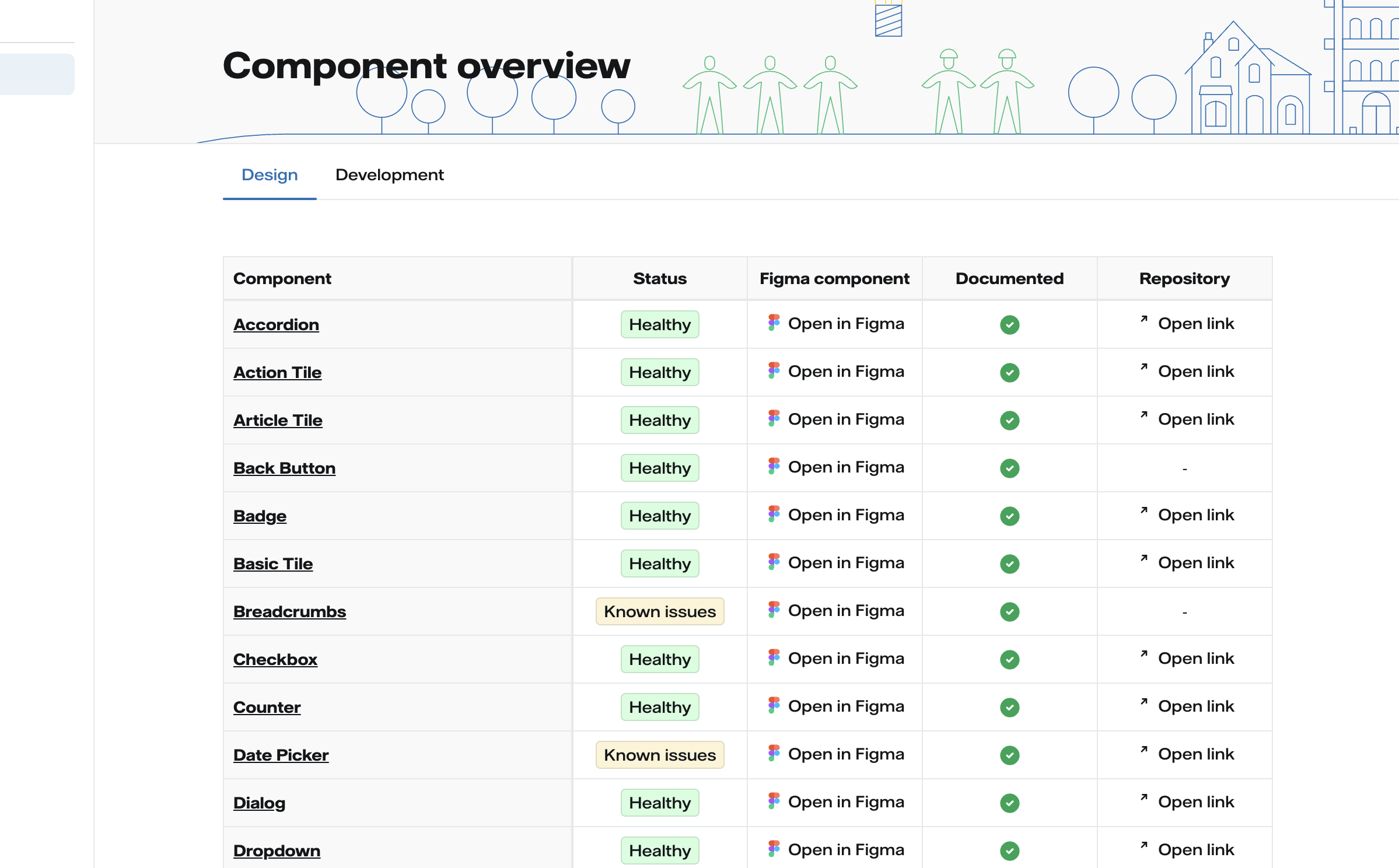
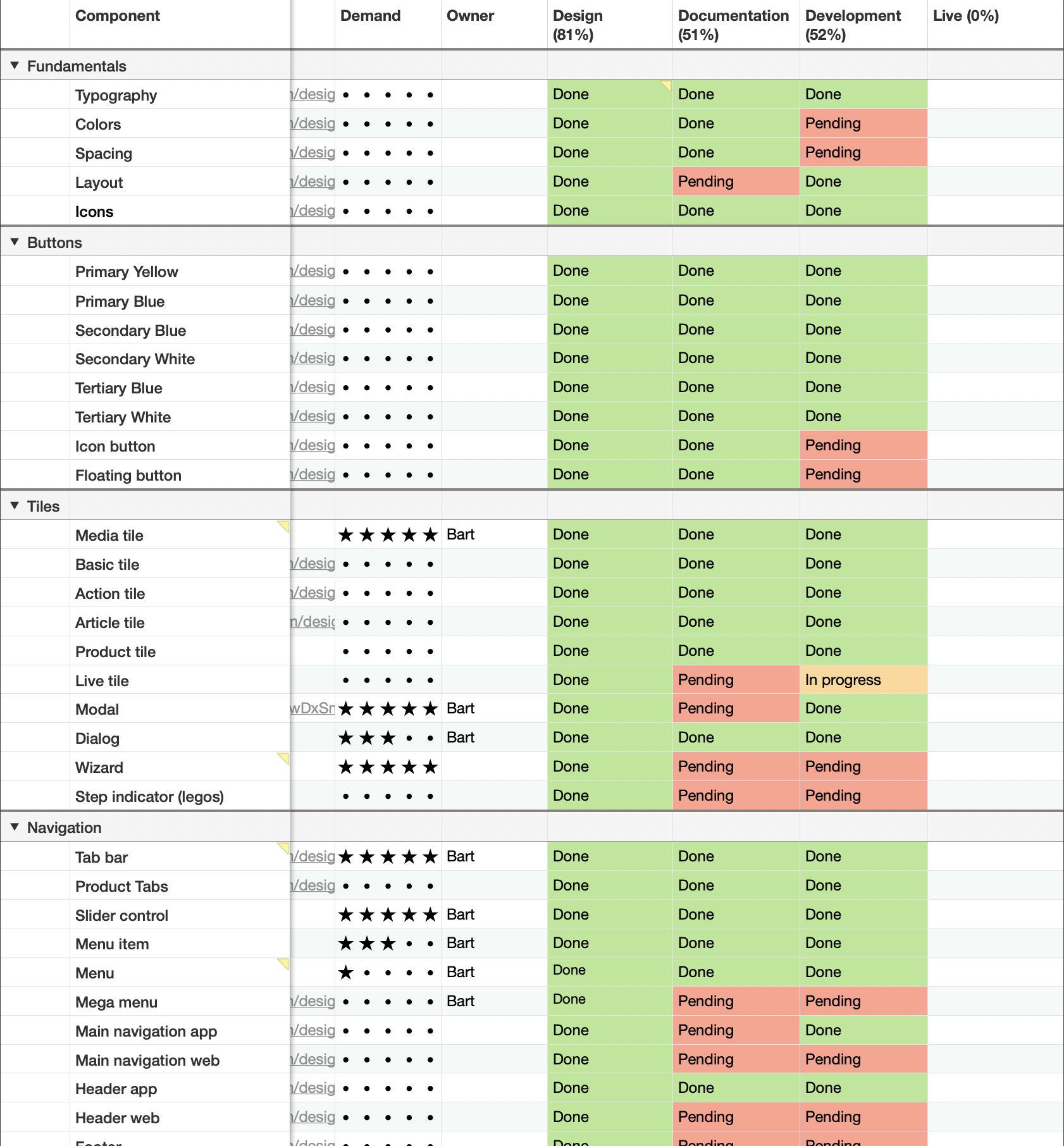
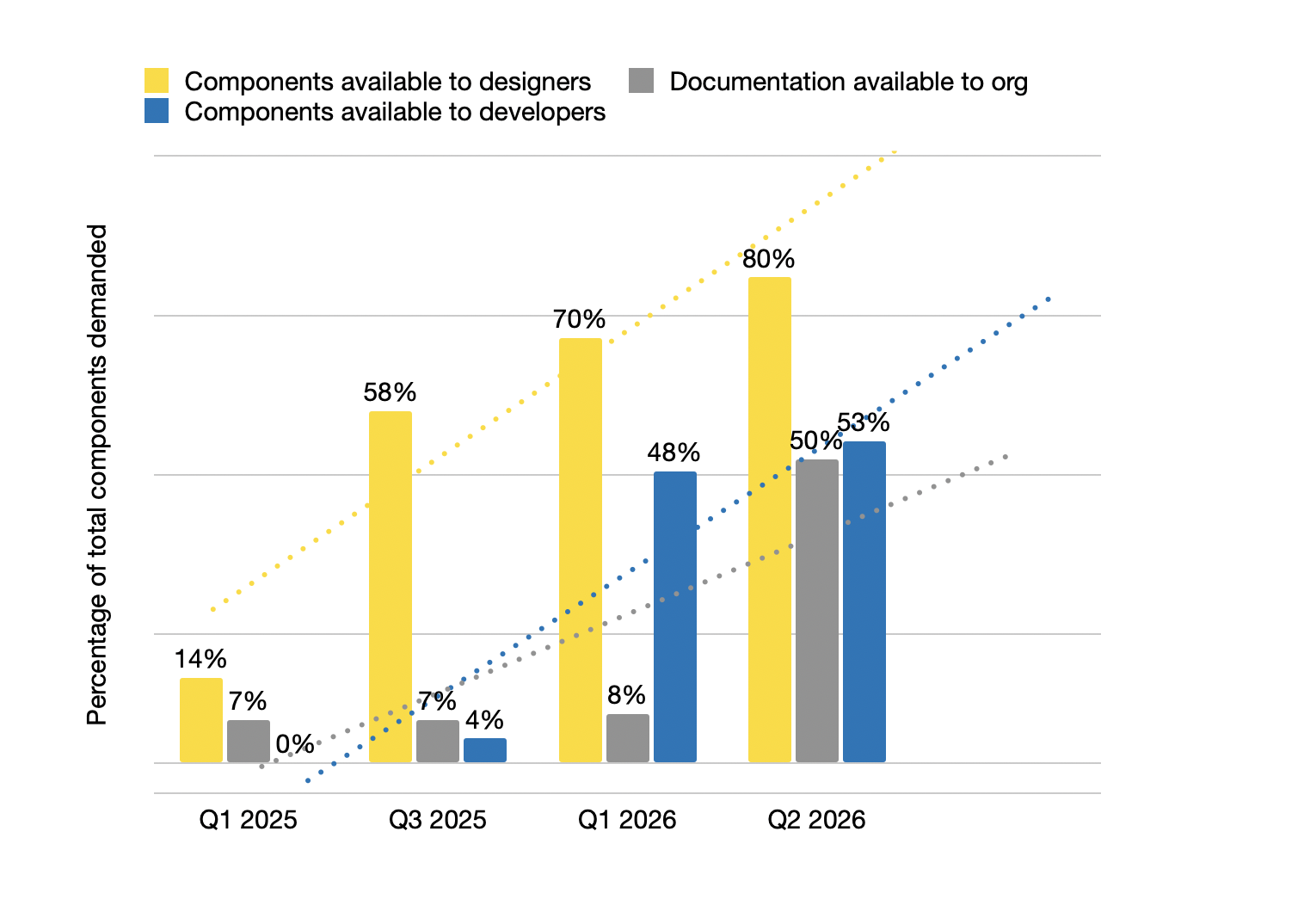
Progress was tracked through a coverage dashboard measuring the maturity of components across design, documentation, and development. This created visibility into gaps, supported prioritisation, and provided a measurable way to track the evolution of the design system over time.
Documentation coverage went from 8% to 50%, while design coverage grew from 70% to 80%. Development coverage also improved during the project, although implementation activities were largely outside the scope of my work.
Adoption & User Feedback
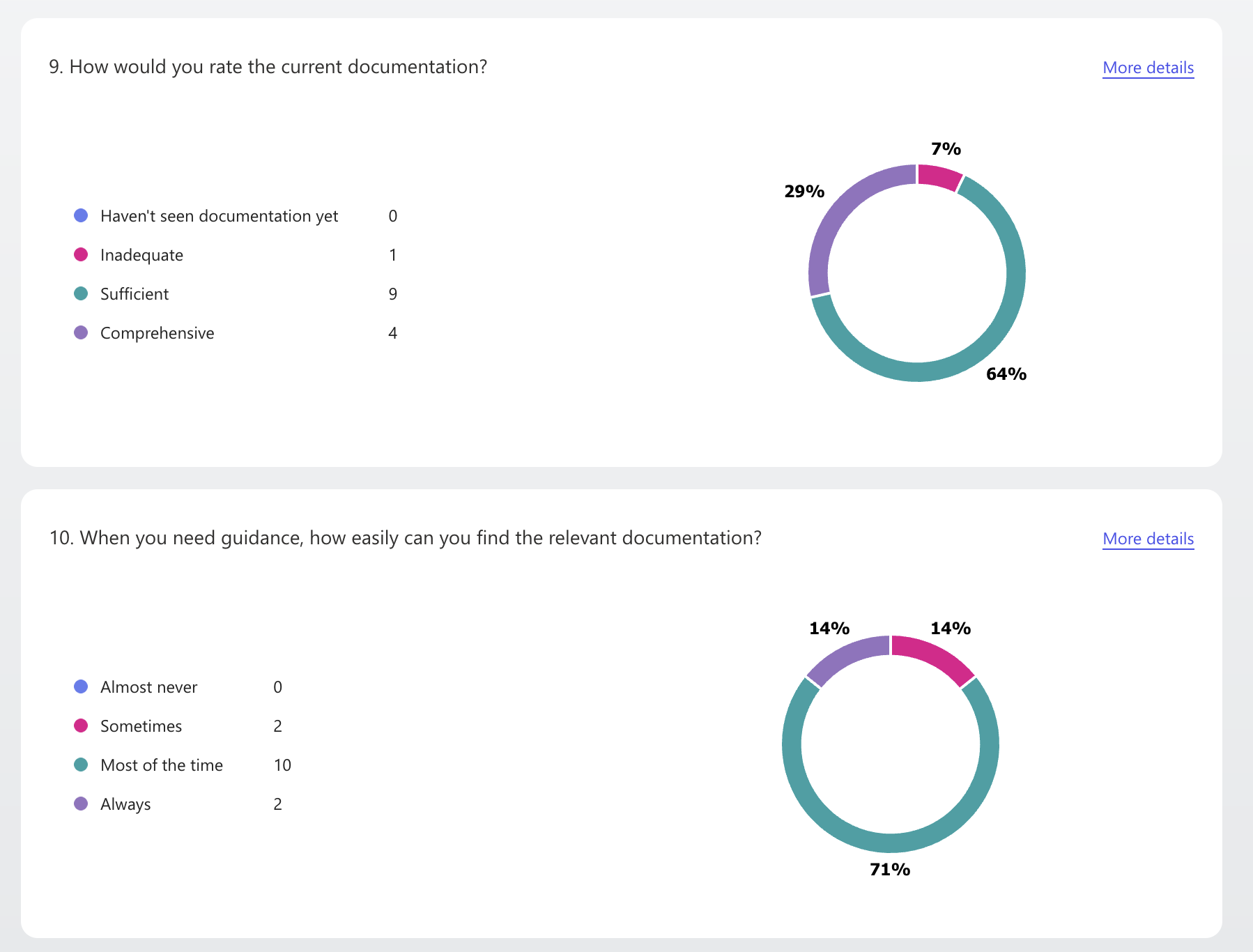
To measure the impact of the documentation improvements, a baseline survey was conducted before implementation and repeated after the redesign.
Key results
Satisfaction score: 0.86/3 → 2.33/3
171% improvement
Adoption increased from 20% → 60%
Validating impact with users
Platform Walkthrough
Final Results
Documentation coverage: 8% → 50%
Design coverage: 70% → 80%
Documentation satisfaction: 0.85 → 2.33 / 3
Design system adoption: 20% → 60%
79% of respondents are very optimistic about the design system's future impact
Reflection
This project taught me that successful design systems depend on more than components alone. Documentation, governance, adoption, and collaboration are equally important in creating a system that teams actively use and trust. Through research, testing, and continuous feedback, I learned how to balance user needs, business goals, and technical constraints within a large organisation.
Moving forward, the design system team will continue maintaining and evolving the platform, while the documentation structure, coverage tracking process, reusable templates, and LLM-readable knowledge base created during this project provide a foundation for future improvements and AI-assisted workflows.